



Whistleblower Overview

Whistleblowing Law Firm in Los Angeles

Under U.S. law, a whistleblower (or whistle blower) is an employee who “tells” on an employer, because he or she reasonably believed that the employer committed an illegal act.

Whistleblowing Laws in California

Under the laws of most states, whistleblowers are entitled to emotional distress and punitive damages. Now, under federal law, specifically the Sarbanes-Oxley Act, any person who “interferes with” the employment or livelihood of an employee for providing any truthful information to legal authorities relating to the commission or possible commission of any federal offense, can be imprisoned for up to 10 years, and pay a fine up to $250,000.

Background media

What Is the Whistleblower Protection Act?

Whistleblower protection is provided by Federal acts and related statutes that shield employees from workplace retaliation for reporting illegal acts of employers. An employer cannot rightfully retaliate in the workplace in any way, such as wrongfully discharging, demoting, suspending, or harassing the whistleblower. If an employer retaliates anyway, whistleblower protection might entitle the employee to file a charge with a government agency, sue the employer, or both.

Typically, to be entitled to whistleblower protection, an employee must report an employer’s alleged illegal act to the proper authority, such as a government or law enforcement agency. If you have seen an illegal act at your workplace, a whistleblower attorney in Los Angeles can assist you in contacting the proper authorities.

Hear From Our Clients

KSJM helped me with my case and always was there when I had questions or concerns. Very friendly, helpful, knowledgeable, and fought hard for me. I highly recommend this law office for your case. A+ guys.

T.D.

Schedule a Free Consultation

Contact Us
Contact us media
older woman looking at laptop screen

Who Is Protected By the Whistleblower Act?

An employee might not be entitled to whistleblower protection for reporting an illegal act only within the company. However, the employee might be protected from retaliation in the workplace by public policy or other laws. For example, if an employee reports sexual harassment to the company’s HR department, he or she is protected from workplace retaliation by Title VII of the Civil Rights Act and cannot be fired for reporting the workplace sexual harassment. A wrongful termination lawyer can explain the differences to you in a free attorney consultation about wrongful termination for reporting illegal activity.


Half image media

Am I Still Protected if I am Wrong About My Employer Breaking the Law?

Even if it turns out that an employer did not actually break a law, an employee is still entitled to whistleblower protection from retaliation if he or she reasonably believed that the employer committed an illegal act.

However, whistleblower protection typically does not include employer retaliation for employee complaints about personal dislikes. To be protected from retaliation by an employer, an employee typically must report an alleged violation of a federal law that has provisions to shield whistleblowers. Though, at the state level, some whistleblowing policies protect whistleblowers who report alleged violations of any laws, regulations or ordinances. Collectively, such provisions are called whistleblower protections or whistleblower laws.

Banner media

What Are State and Federal Laws About Whistleblowing Cases?

Whistleblowing laws in California and federal whistleblower laws have provisions for employer retaliation protection and are enforced by a number of government agencies. For example, the U.S. Department of Labor (DOL) and its divisions enforce several major laws that directly protect whistleblowers or have provisions to shield employees from retaliation for reporting violations of the laws, refusing to engage in any action made unlawful by the laws, or participating in any proceedings under the laws.

Federal whistleblower laws mandate only the minimums to which all states must adhere. States are allowed to create their own whistleblower laws, which include or expand upon the minimum protections afforded by the federal laws. To research your state’s whistleblower laws, start with the employment resources listed in State Labor Law and Employment Law. You can also contact your state’s department of labor.

What Do I Do if I Was Wrongfully Terminated?

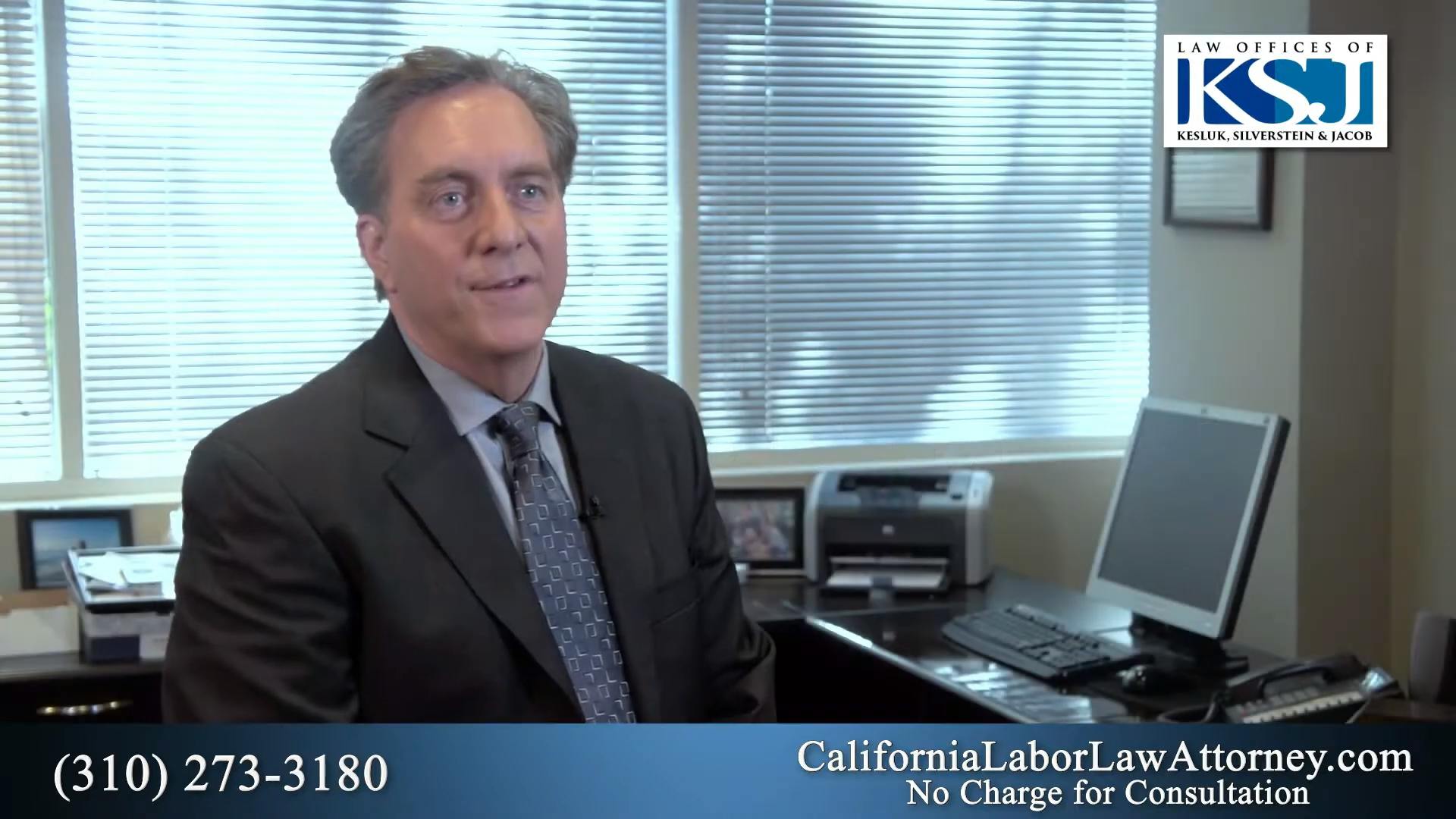
Attorney talking
Doctor media

Why Choose the Whistleblower Lawyers at Kesluk, Silverstein, Jacob & Morrison in Los Angeles?

Kesluk, Silverstein, Jacob & Morrison have been protecting the rights of workers in Los Angeles for more than 30 years. Our skilled team of attorneys is dedicated to advocating for employees who face unfair treatment from powerful employers. With decades of experience and a strong record of advocacy, we work to ensure every client receives the justice they deserve.

Before reporting misconduct, it’s wise to consult with an attorney to confirm that whistleblower protections apply to your situation. At Kesluk, Silverstein, Jacob & Morrison, we represent individuals who have faced retaliation for exposing illegal or unethical practices. If you’ve witnessed wrongdoing and are unsure how to move forward, contact a whistleblower lawyer in Los Angeles for a confidential, free, no-obligation consultation. You have rights that must be protected, and our wrongful termination lawyers offer a free Q&A guide to help you better understand whistleblower laws in California.

Doctor media
Contact us media

© Kesluk, Silverstein, Jacob & Morrison. All Rights Reserved.

Accessibility: If you are vision-impaired or have some other impairment covered by the Americans with Disabilities Act or a similar law, and you wish to discuss potential accommodations related to using this website, please contact our Accessibility Manager at (310) 997-4431.
Contact Us